Arabic · العربية
Edit Arabic interviews with AI
You have hours of Arabic interviews and need a story, captions and a timeline your editor can finish. Here is how Eddie gets you there, one step at a time: what you ask, what Eddie does, and what you get back.
Step by step
Step 01
Bring your Arabic interviews in
- You ask
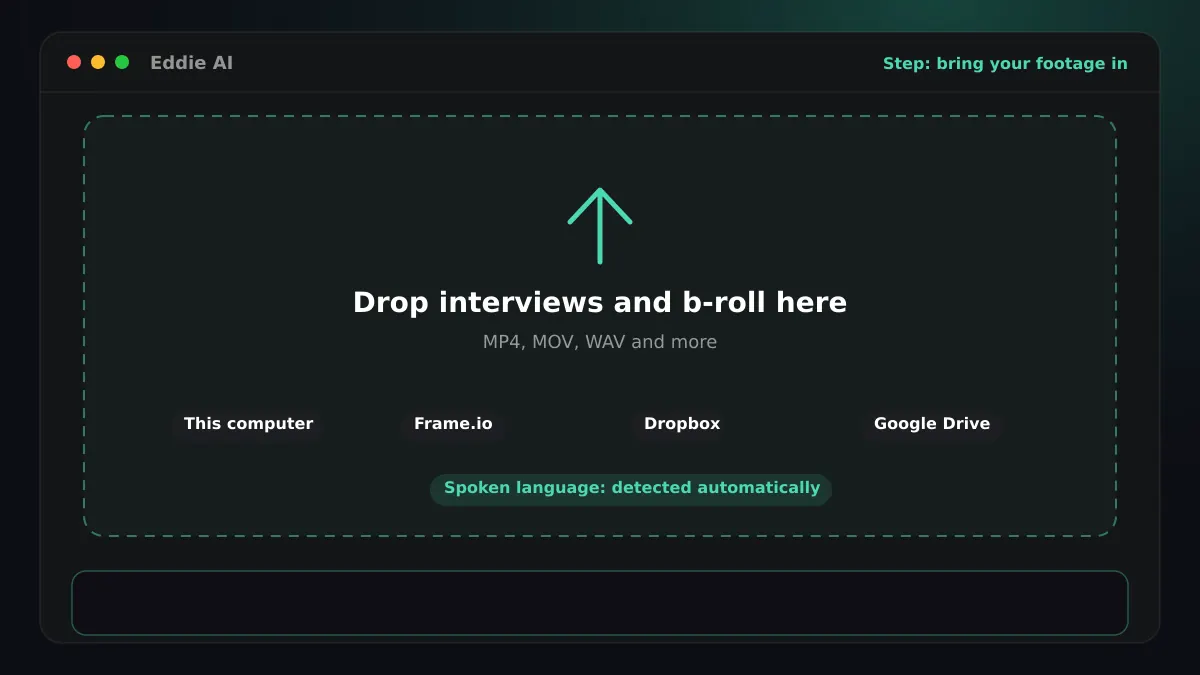
- Upload the interviews, or add them from Frame.io, Dropbox, Google Drive or your editor's bin.
- Eddie does
- Eddie imports the interviews and any b-roll, from the browser or from the desktop app, which also reads bins in Premiere Pro, DaVinci Resolve and Final Cut Pro. It analyses every file before you can prompt, so no edit is built on half the footage.
- You get
- One project with every source, analysed and searchable.
Step 02
Transcribe the Arabic
- Eddie does
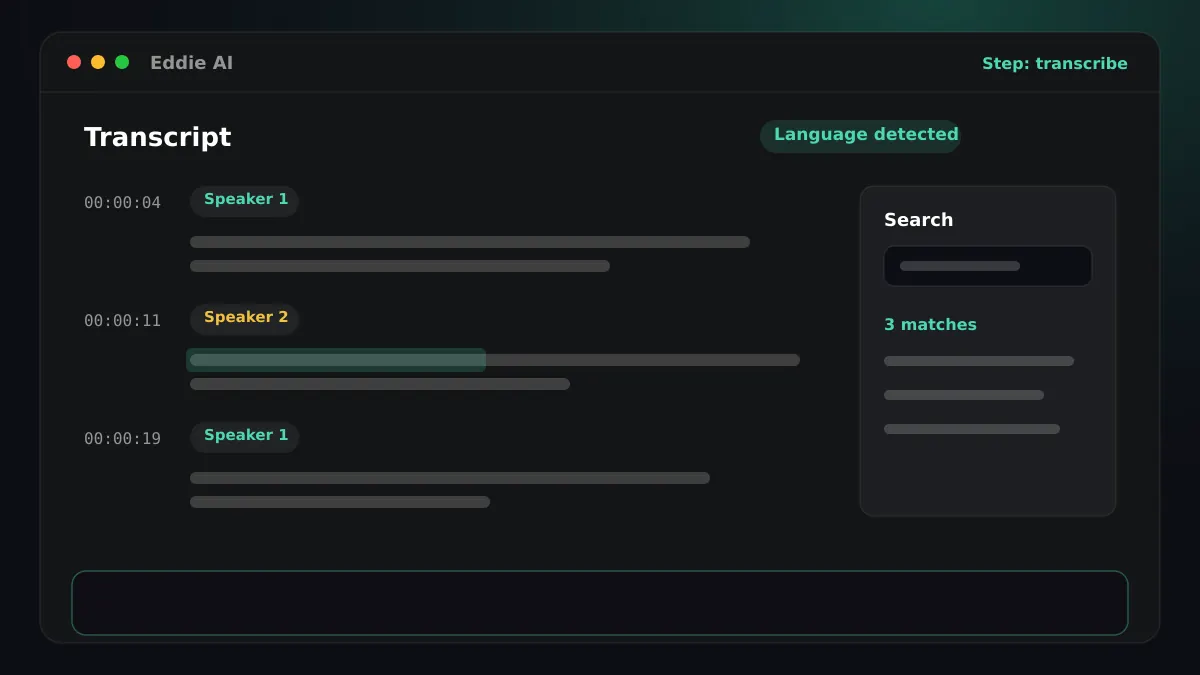
- Eddie detects Arabic on its own, so you do not have to choose it. If an interview switches between languages, Eddie detects that too. It labels the speakers and keeps a timing for every word.
- You get
- An Arabic transcript in Arabic script that you can search and cut from. Ask Eddie to fix a misheard name everywhere it appears, or to rename “Speaker 1”, and every word keeps its timing.
Step 03
Ask Eddie for the cut
- You ask
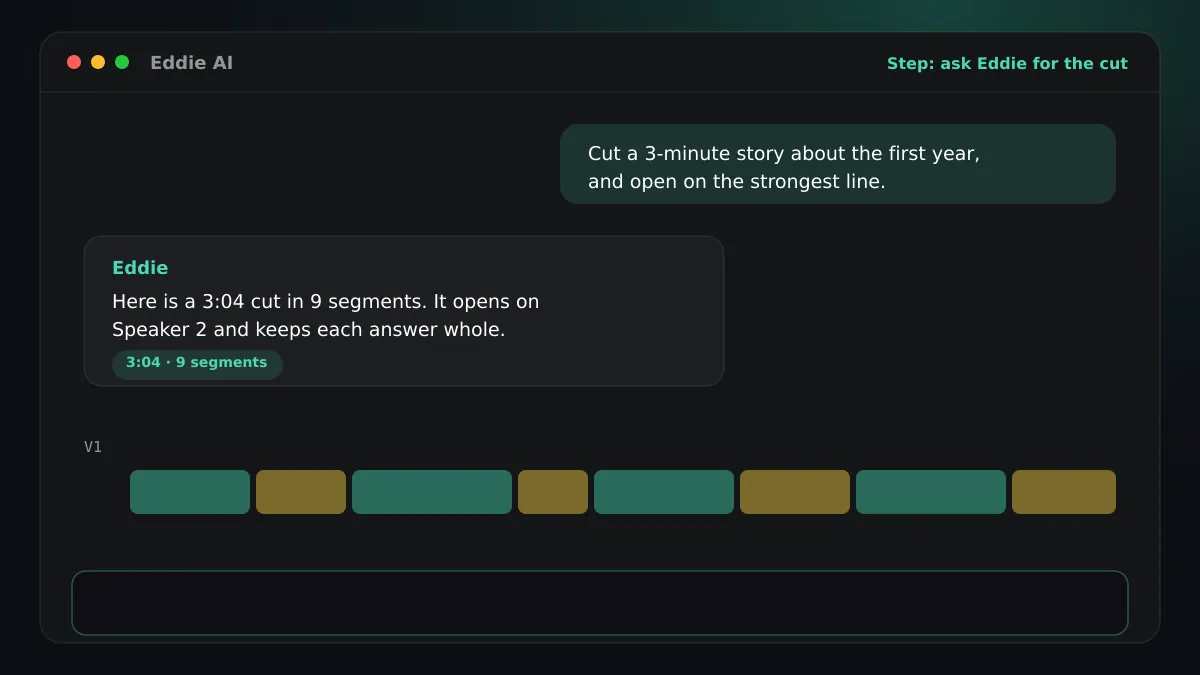
- “Cut a three-minute story about how the company started, and open on the strongest line.”
- Eddie does
- Eddie reads the Arabic transcript, picks the soundbites that answer your brief, proposes a story structure and builds the edit beat by beat. It tells you the finished length against your target. You can prompt in English about footage in any language.
- You get
- A rough cut you can watch, trim, reorder and refine in plain words.
Step 04
Cut to the right camera for each speaker
- You ask
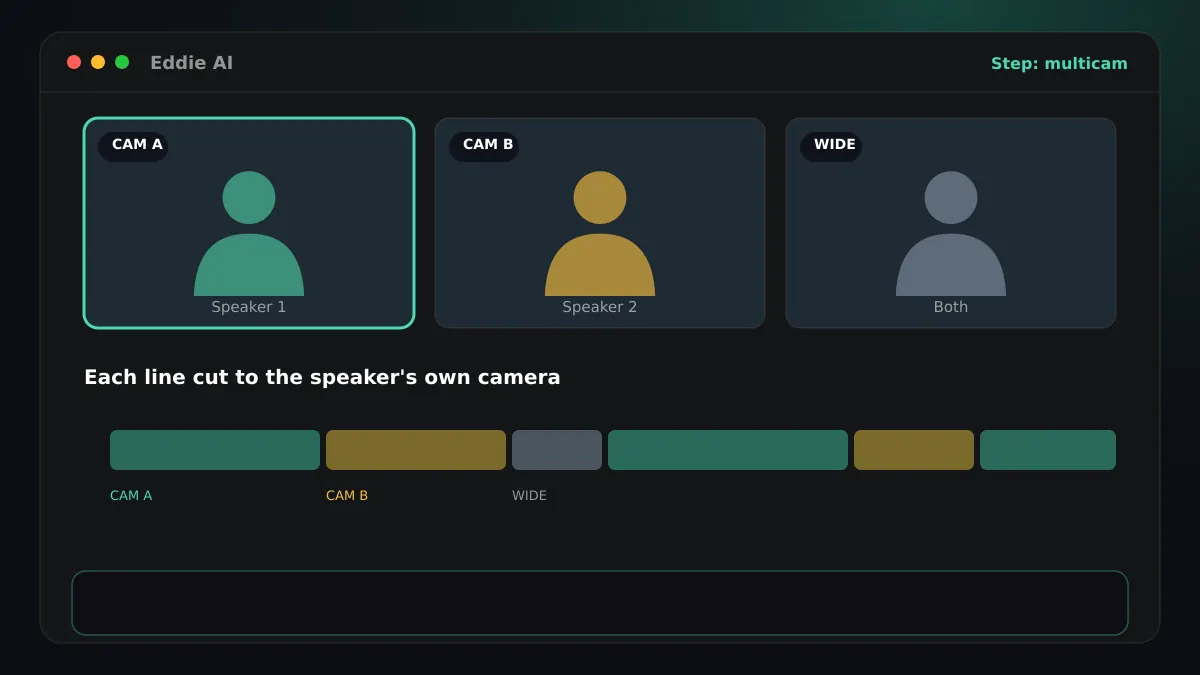
- “Stay on whoever is talking, and use the wide for quick back-and-forth.”
- Eddie does
- Eddie groups the cameras of one take, syncs them, and cuts each line to the speaker's own camera. When the angles are not labelled, it works out which camera shows which speaker and asks you to confirm. Short interjections stay on the current camera, and switching angle can hide a jump cut where a line was trimmed.
- You get
- A multicam cut that follows the conversation, ready to export to your editor.
Step 05
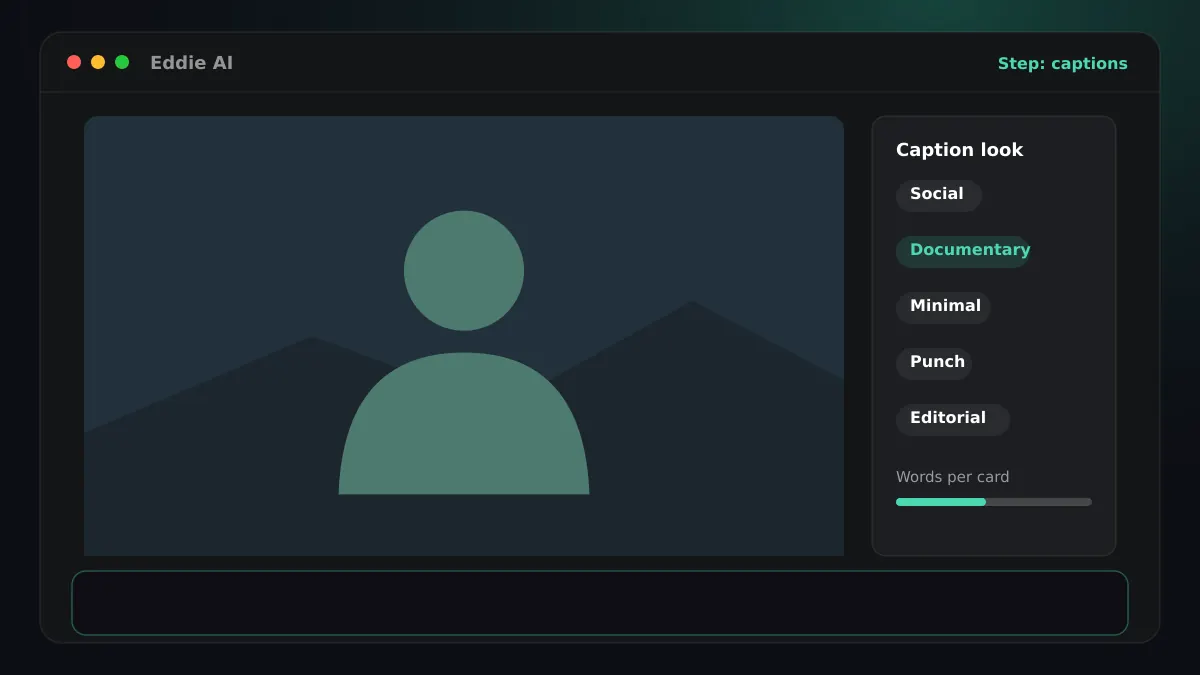
Add Arabic captions
- You ask
- “Add documentary captions, two lines at the bottom.”
- Eddie does
- Eddie builds the captions from the Arabic word timings, in one of five looks: social, documentary, minimal, punch or editorial. Filler words are left out of the caption text by default. Captions are the spoken words, never a translation.
- You get
- Captions in the player, ready to burn into an MP4 or carry into your editor, plus free SRT and VTT files. Arabic captions burn into the cloud MP4 export, which shapes Arabic text correctly and runs each line right to left. A desktop build that cannot draw the script yet refuses its local render and points you to the cloud export.
Step 06
Finish in your editor, or deliver an MP4
- You ask
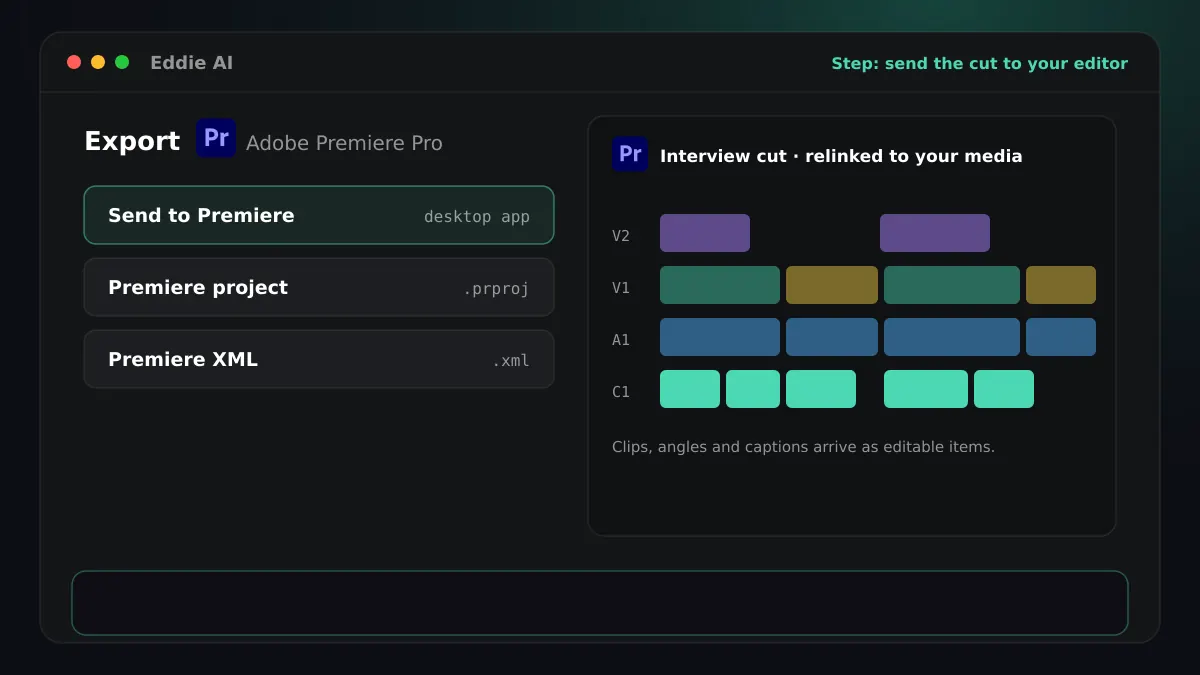
- “Export this edit for Premiere.” Or Resolve, Final Cut Pro or Avid.
- Eddie does
- Eddie writes a timeline your editor opens with every clip relinked to your source media: a Premiere project or XML, a DaVinci Resolve project or FCPXML, a Final Cut Pro XML, or an AAF into Avid Media Composer (beta). Or it renders a finished MP4.
- You get
- The cut in the tool you finish in, with angles and captions as editable items.
Good to know for Arabic
The script
Arabic is written in Arabic script. It reads right to left. In an editor file, the caption cards arrive as Arabic text, and your editor draws them with its own text engine and your installed fonts. Before you deliver, check one card for the font and the right-to-left line order.
Burned-in captions
Arabic captions burn into the cloud MP4 export, which shapes Arabic text correctly and runs each line right to left. A desktop build that cannot draw the script yet refuses its local render and points you to the cloud export.
On-screen titles
Eddie's own titles and motion graphics do not render Arabic text correctly yet. Captions are not affected. Set on-screen titles in your editor instead.
Finish Arabic edits in your editor



Questions
- Do I have to tell Eddie the interview is in Arabic?
- Eddie detects Arabic on its own, so you do not have to choose it. If an interview switches between languages, Eddie detects that too.
- Can Eddie translate Arabic captions into another language?
- No. Captions are always the spoken words, verbatim. Translating what the edit says is dubbing, which is a separate feature.
- Can Eddie add on-screen titles in Arabic?
- Eddie's own titles and motion graphics do not render Arabic text correctly yet. Captions are not affected. Set on-screen titles in your editor instead.
- Can Eddie make an audio-described version in Arabic?
- Not yet. Eddie's audio description is built and measured for English speech, so it is offered for English programmes only.
Related guides
Also from Middle East & Central Asia
Try it on your own footage
Bring your first Arabic interview in and ask Eddie for a cut.