Case Study
How Jesús Contreras Uses Eddie as an Assistant Editor
Fahad AhmedJun 19, 2026
At a glance:
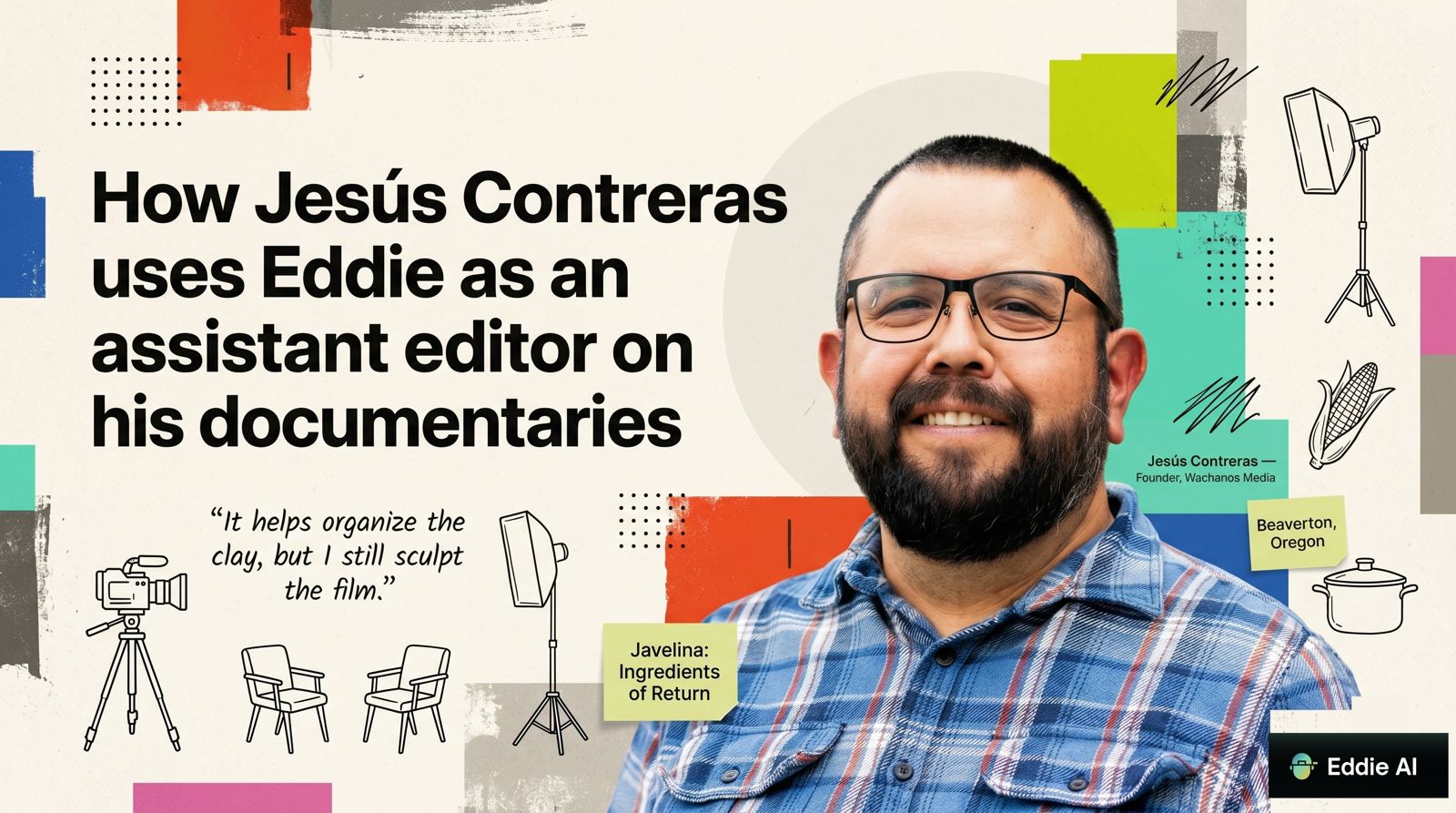
"It helps organize the clay, but I still sculpt the film." — Jesús Contreras, founder, Wachanos Media
The story with too many threads
Jesús Contreras is a documentary filmmaker and editor based in Beaverton, Oregon, and the founder of Wachanos Media. His latest is Javelina: Ingredients of Return, a short documentary about Indigenous chef Alexa Numkena-Anderson.
The film was never only about food. "It is about what food carries and what it can help restore," Jesús says. The title came from a single idea, that return is made of real things: ingredients, relationships, labor, culture, and place.
The trouble with a story like that is that everything wants in. The footage was interview-driven, layered with observational shots of food, ingredients, people, and place, and every layer pulled in its own direction: Alexa's personal journey, the cultural context, her collaborators, the emotional weight underneath.
"The challenge is finding the spine of the story without making it too broad."
Eddie as the assistant editor
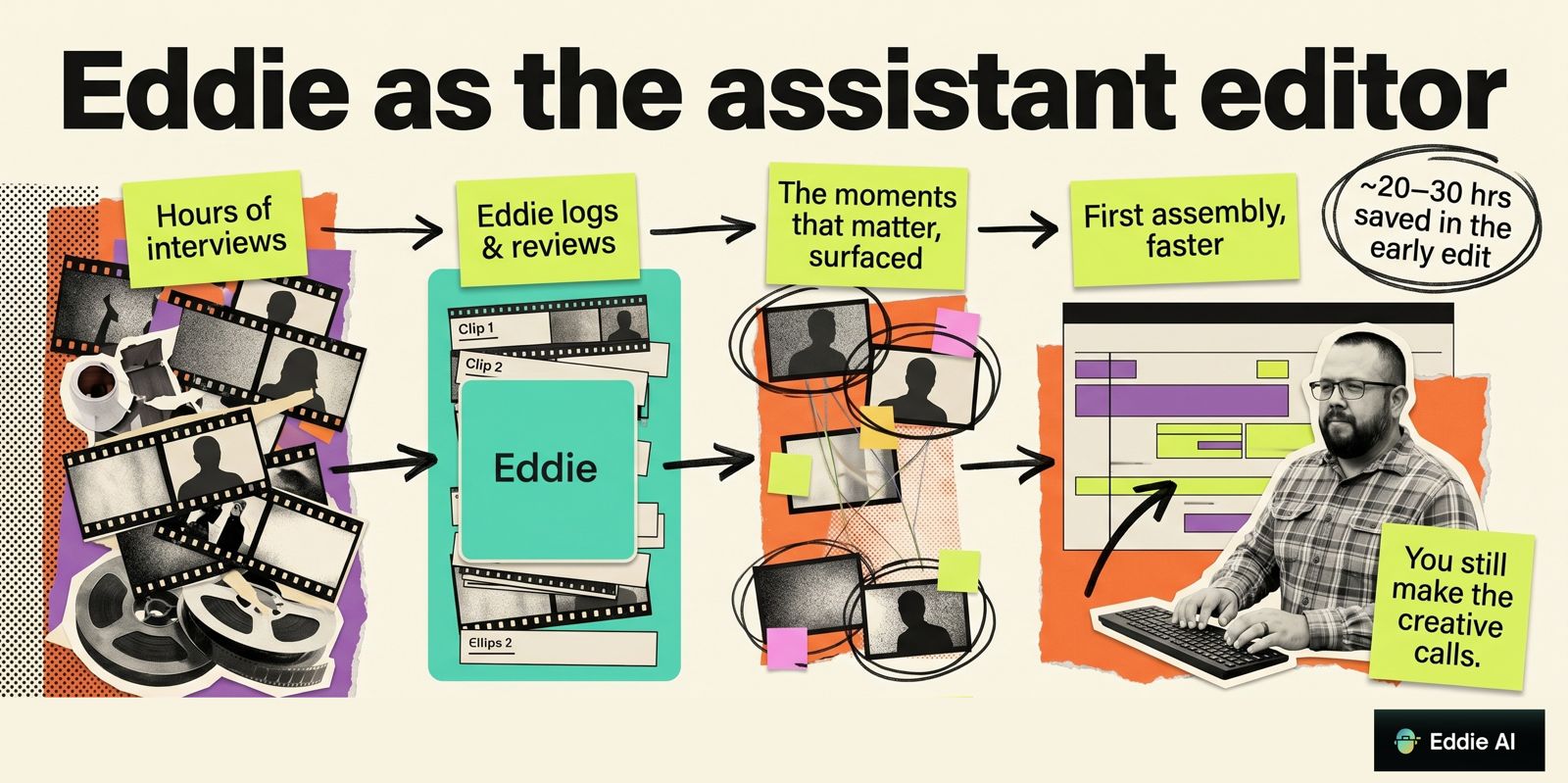
The part that threatened to swallow the schedule wasn't the storytelling. It was everything that had to happen before the storytelling could start. Hours of interviews had to be logged, reviewed, and combed for the moments that mattered.
So Jesús reached for Eddie early, before moving fully into his NLE. He used it to log the interviews, surface the strong moments, and start seeing the threads, getting him to a first assembly faster without taking the decisions out of his hands. "It helps me get closer to a first assembly faster," he says, "but I still make the creative decisions."
For a project this layered, he estimates Eddie saved him twenty to thirty hours in the early editorial stage alone, the logging, the reviewing, the hunt for structure. The bigger shift was how the work felt.
"It makes the material feel less overwhelming."
What Eddie doesn't do, and that's the point
Jesús is precise about the line between help and authorship. "Eddie is good at organizing interview material and helping surface useful moments. But it does not replace the editor." He still shapes the pacing, the tone, the emotional arc, the visual rhythm, and the final structure. The metaphor he reaches for says it best: it organizes the clay, but he still sculpts the film.
That is also the advice he would give another documentary editor.
"Use it as an assistant, not as a replacement. It is useful when you have a lot of interviews and need help getting through the material faster. But the judgment, taste, and responsibility still have to come from the editor."
The result
The grind that used to eat the first days of an edit was handled. Twenty to thirty hours back at the front of the project, a sprawling, many-layered story moved toward its spine faster, and every creative call, structure, tone, emotional arc, stayed with the filmmaker who knew why he was telling it.
Javelina: Ingredients of Return is in production, a Wachanos Media production. By the old math, getting through that volume of interview footage meant either more hands or more nights. Jesús did it with one editor and an assistant that knew its job.
Try Eddie on your next documentary cut →
Drop your interviews in and let Eddie hand you a starting point. heyeddie.ai ↗